Sneha Karma, committed to the cause of uplifting women, believes in empowering women and alleviating poverty through education. One of our prominent causes is to provide good educational facilities to the underprivileged girls. Through our programs we support women by developing their skills and allowing them to work and thrive in an environment without child marriages, child labor, poverty, gender inequality, exploitation and other social challenges.
Poverty
-
Poverty, is one of the biggest social evils that plagues India today. Almost 22% of the population in India is below its official poverty limit, making this a major obstacle for education of girls. Parents facing economic difficulties and fighting poverty respond by removing their daughters from school. Girls are expected to take over household chores or work in the fields to support the family. Due to poverty , some are even forced in to child labor where they are exploited.
-
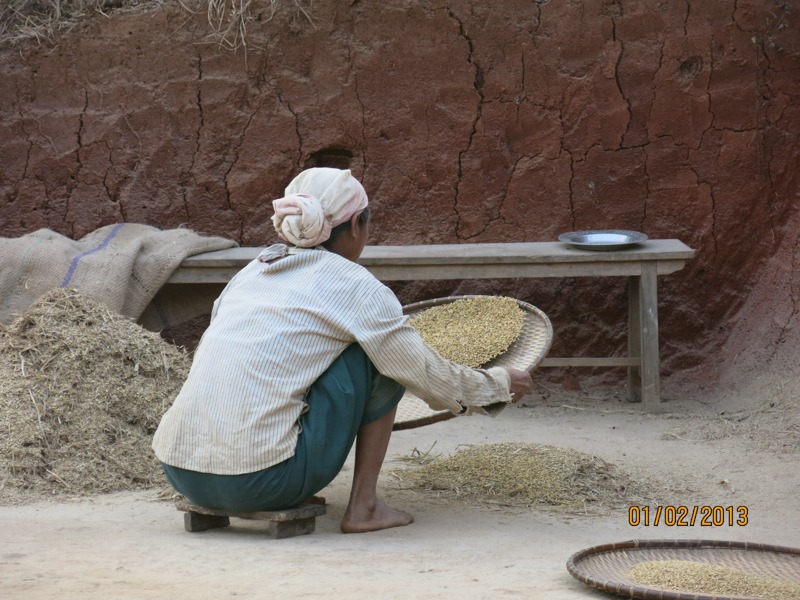
The majority of Indian people live in villages, where most of the domestic roles are consciously or subconsciously assumed by women. The potential of women’s active economic role through engagement in, for example, the entrepreneurial or formal sector is grossly undermined. Families fighting poverty are doubly affected by this sort of conservative outlook – the opportunity to tap domestically available human resource for income earning is lost; and women’s domestic role continues to be devalued with the consequence that the family remains unable to escape from the poverty trap and support the schooling of daughters.

-
Poor Sanitation
-
Lack of toilet at home: A high percentage of homes in villages, don’t have toilets in the their homes. Men being Men, use the public places and farms to openly defecate. Woman unfortunately do not have that option. They have to use the farms but only after sunset and/or before sunrise. If they are unable to maintain this routine, they have to wait throughout the day to wait for next sunset. They have to restrict their diet for whole day.
-
Woman in villages have very little awareness regarding use of sanitary pads during periods. Women generally use normal clothes which are inconvenient and unhygienic. Girls decide to stay at home on the days of periods (after puberty) and eventually decide to drop-out of school.
-
-
Under Nourishment
-
One of most understated problems facing the Indian girl child is that of poor nutrition. Girls belonging to the poorer families suffer the most. Because of limited incomes it is an unsaid rule that while the male siblings are provided with milk, fruit and eggs, the girl but has to make do with the regular rice and lentil or sometimes even less. It is for this reason that girls are more susceptible to poor health and disease.
-
Various surveys indicate that women’s caloric content is about 100 calories (per women per day) less than they spend, whereas men show an 800 caloric surplus intake. Women expend a great deal of energy working inside and outside the house, whereas they often have insufficient food.It has also lead to many cases of Death During Childbirth.
-
Education
Education promotes equality and lifts people out of poverty. It teaches children how to become good citizens. Education is not just for a privileged few, it is for everyone. It is a fundamental human right.
~ Ban Ki-moon
- Lack of Good Educational Facilities and Gender Inequality in Education
- Going to school is a big step, but if the quality of education is poor it reduces their future prospects. Especially in rural areas, this is a major problem as there is no access to good quality education.
- In some areas, children have to travel miles to get to school. In addition to this, economic and financial situation of families in rural areas drive children toward labor vs education.
- Gender inequality in education is a major roadblock in getting girls to go to schools as families in rural areas are generally of lower economic status and don’t see the point in educating a child when there are no real opportunities post graduation. This is especially the case for a girl, who would rather be expected to support the family.
- The quality of education, distance, lack of female teachers and poor sanitation are often quoted as reasons for leaving by many parents.
- A majority of government-funded schools do not comply with basic standards set, not all teachers are professionally trained and even electricity is a luxury in some rural areas. Unless parents of the girl child see value in educating their child, they will resist doing so.
- High School Dropouts and Social Misconceptions
-
According to UNICEF, 80 million children out of the 200 million admitted in elementary schools are likely to drop out. That’s right. 40 percent of the children between the ages of 6 and 14 would not even complete their elementary education.
-
According to this infographic, dalits, tribal minorities and adolescent girls are much more likely to drop out of school. For a nation that strives for aggressive rural development, we don’t seem to care much about our young, especially the deprived young, comprising of dalits, tribals, minorities and adolescent girls.
-
A joint study by Unesco Institute for Statistics and the Global Education Monitoring Report has found that 47 million adolescents in India have not progressed to upper secondary school. As per the data, the country has the highest number of out-of-school adolescents in the world.
- A lot of girls aren’t enrolled to schools and a lot of the ones that are, drop out. Proper formal education will lead to girls having better jobs and being financially independent. There are various causes for this, some being :-
- Girls are expected to stay home and raise a family, whereas men are expected to work. Given this a lot of parents don’t see the need to send their girl children to school.
- Girl who do happen to work will not support their parents after they are married into another house, ergo, their education isn’t a priority to a lot of parents. On the other hand, investing on their male child’s education will be beneficial in the future because he’ll one day start to run the household and look after his parents.
- In poor households girl children are expected to help with chores instead of throwing away time in school.
- Learning household chores is a priority because it increases the girl’s value in the marriage market, thus, a lot of parents prefer their girl child stay home and learn what will really be of any use to her.
- Fear of safety while going to school
-
Gender Inequality & Social Challenges
Every minute of every day, the Girls in some parts of the world are told in various ways that they are unequal to men. Instead of fighting for their equal rights with Men, they should be treating them as superior and do all that they are told to do by Men. Gender inequality is one of the social challenges that needs to be eliminated as soon as possible for the betterment of the society.
“In the nineteenth century, the central moral challenge was slavery. In the twentieth century, it was the battle against totalitarianism. We believe that in this century the paramount moral challenge will be the struggle for gender equality around the world.” — Nicholas D. Kristof
“Empowering women is a prerequisite for creating a good nation, when women are empowered, society with stability is assured. Empowerment of women is essential as their value system leads to the development of a good family, society and ultimately a good nation.” — Dr. A.P.J. Abdul Kalam
Gender inequality still exists in India within the households, workplaces and in larger society. As per 2011 data, effective literacy rates (age 7 and above) were 82.14% for men and 65.46% for women.
In certain developing nations like India, gender inequality starts manifesting itself very early, a girl child starts facing discrimination right from the womb and it ends in female foeticide. The female child is treated as inferior to the male child and this is deeply engraved in the mind of the female child. This is more predominant in India as well as other lesser developed countries. A male child is considered a blessing and his birth is celebrated, as opposed to a female child whose birth is not celebrated and is considered more of a burden. The 2011 Indian census shows that there are 940 females per 1000 boys.
Educating a boy is seen as an investment as they are expected to earn and provide for their ageing parents. Whereas, an educated girl will have a higher dowry expense because they need an educated partner. It is also believed to be a waste of resources to educate a girl child as she will eventually get married and be a homemaker. If a family cannot afford to educate all their children, the male child will get preference.
Educating a daughter, especially in a poor family, is perceived not only as an unnecessary luxury but also as a liability. As dowry is still a widely practised cultural norm, the birth of a daughter in the family is, in the first place, a huge financial burden. Secondly, a girl by virtue of her feminine status is expected to marry a man who should be in a better social position and level of education than her. This phenomenon is lucidly explained by Dreze and Sen (1995): “If an educated girl can only marry a more educated boy, and if dowry payments increase with the education of the groom, then, given other things, an educated girl is likely to be more expensive to marry off”. For a poverty-stricken family, it is unthinkable to meet the dowry demand of an educated groom.
Many women face exploitation after their marriage. There can be numerous causes of exploitation: exploitation because the full demanded dowry was not provided; exploitation because the husband is a drunkard and quarrelsome; grief because the husband is not able to support the family, and so on.
The patriarchal framework excludes women from taking economic decisions at the family as well as the village level. This is despite the fact that many women in lower socioeconomic groups contribute substantially to family income by working in the fields. It is accepted that women, especially rural women, are the single most economically disadvantaged group in today’s India. In a poor family, young school-age girls are required at home to help the family with essential household chores or for subsistence wage labor. Boys may be spared from such chores and given the opportunity to go to school.
Child Marriage & Trafficking
More than 50% of girls from the poorest families in the developing world are married as children. Girls from poor families are more than three times more likely to marry before 18 as girls from wealthier families. In a few rural areas in India, child marriages are practiced as a result of misplaced social beliefs and lack of understanding of gender equity. Girls are given away in marriage at a very young age, depriving them of access to education, training and the right to taking control of their destinies.
Child trafficking is the act of recruiting, transporting, transferring, harboring or receiving children through the use of force, coercion or deception for the purpose of exploiting them. This concept is accepted internationally but it tends to place too much emphasis on movement. We see women trafficking as a form of modern-day slavery, where people profit from the control and exploitation of others. Every country is affected by trafficking, whether as a country of origin, transit or destination. It is a lucrative criminal industry, second only to drug trafficking, generating billions of dollars annually. Often, there are much more subtle forms of coercion or force within families and communities due their economic status. Parents of a few girls give away their children for financial sustenance, resulting in child trafficking and child marriages.
Broadly speaking, there are two main types of child trafficking: sex trafficking and labor trafficking. The latter type includes things like domestic servitude, field laborer, child soldiers, factory laborer, bridal and reproductive slavery, and organ trade, etc.
Child trafficking and child marriage are social evils that Sneha Karma is working towards alleviating. Every child deserves to be educated and have a bright future devoid of exploitation. Through our programs we work towards developing skills and empowering children so that they can thrive and contribute positively to the society.
We have designed our programs such that the under-privileged girls in our programs can overcome all the above challenges and many more, to get an equal opportunity in life. Support us by donating and/or volunteering your time with us.