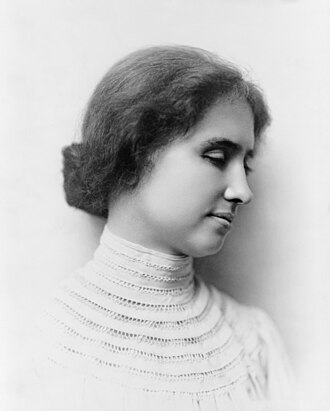
“I long to accomplish a great and noble task, but it is my chief duty to accomplish small tasks as if they were great and noble.”
Helen Keller
Author and activist
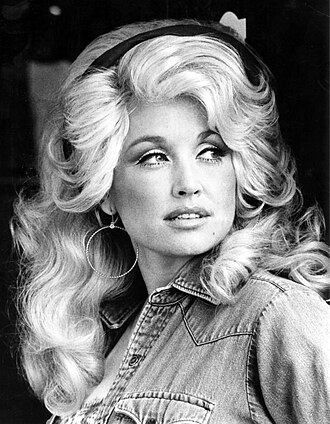
“I have learned that you can’t have everything and do everything at the same time. But you can help people.”
Dolly Parton
Singer and philanthropist
“The meaning of life is to find your gift. The purpose of life is to give it away.”
Pablo Picasso
Artist
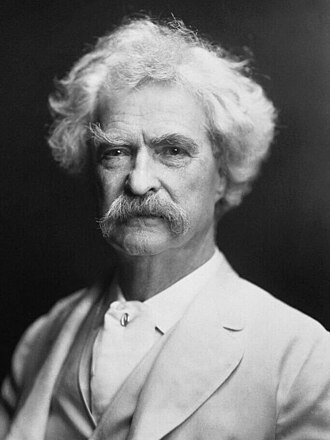
“Kindness is a language which the deaf can hear and the blind can see.”
Mark Twain
Writer
The root cause of every challenge a girl faces
Every challenge in these pages — poverty, a girl denied an education, child marriage, trafficking — shares a single root: girls are valued less than boys. Gender inequality is not one more issue on a list. It is the reason the other causes exist, the quiet conviction that shapes what a girl is fed, whether she is sent to school, when she is married and how easily she can be exploited. It is the belief we exist to change.
We believe that in this century the paramount moral challenge will be the struggle for gender equality around the world. — Nicholas D. Kristof
Why It Matters
In India and many developing countries, gender inequality begins the moment a pregnancy is found to be a girl. A male child is considered a blessing and his birth is celebrated; a female child is seen as more of a burden from the very start.
A girl faces discrimination from the womb — in its most extreme form, female foeticide. She is treated as inferior to a male child, and this belief is deeply engraved in how she is raised. The 2011 Indian census recorded just 940 females for every 1,000 boys — daughters missing before they were ever given the chance to begin.
What This Means for Girls
Educating a boy is seen as an investment, because he is expected to earn and provide for his ageing parents. Educating a girl is often seen as a waste: she will marry and become a homemaker, and an educated girl is thought to need a more educated — and therefore more expensive — groom. When a family cannot afford to educate all its children, the boy gets the school seat.
Effective literacy rates tell the story: as per 2011 data, 82.14% of men but only 65.46% of women aged 7 and above are literate. In poor families, young school-age girls are kept home for household chores or subsistence wage labour while their brothers are spared and sent to school.
Because daughters are seen as a financial burden, dowry remains a widely practised cultural norm. A girl is expected to marry a man of better social position and with more education than herself — and the higher the groom’s education, the higher the dowry. As Dreze and Sen (1995) explain: “If an educated girl can only marry a more educated boy, and if dowry payments increase with the education of the groom, then an educated girl is likely to be more expensive to marry off.” For a poverty-stricken family, meeting such a demand is unthinkable.
This inequality does not end at the wedding. Many women face exploitation after marriage — because a demanded dowry was not provided, because a husband is unable to support the family, or because they are excluded from decisions. A patriarchal framework keeps women out of economic decisions at family and village level, even though rural women are often the single most economically disadvantaged group in India.
“What we have done for ourselves alone dies with us; what we have done for others and the world remains and is immortal.”
Albert Pike
Author
How We Respond
Gender inequality does not sit apart from the other causes — it feeds them. A girl who is valued less is the first to be pulled out of school, the first to be married off, and the first to be trafficked when her family is desperate.
It means she eats last, leaves school first, is married early, and has less say over her own life. Poverty and gender bias reinforce each other — together they decide how far a girl can go.
Families with limited resources often educate sons first; girls are kept home for chores or married early. The belief that a girl’s education matters less is the root cause we work on.
We work on belief and education together: community awareness that changes how families see girls, and girls’ education and skills that make those changed beliefs real and lasting.
Fund a girl’s education, volunteer your skills, or amplify the cause. Every girl who finishes school and earns her own living shifts what her whole community believes is possible.